2026 Scans Reveal the Hidden Fascial Stranglehold Behind Chronic Sciatica — And Why 87% of Sufferers Are Being Treated for the Wrong "Spine" Problem
Over 100,000 men and women are finally escaping blinding shooting leg pain, burning glute spasms, and useless spinal injections — after breakthrough ultrasound elastography scans revealed the dehydrated connective tissue clamp that standard lumbar MRIs missed completely.


Figure 1.1: High-resolution ultrasound sonoelastography imaging of the deep gluteal and thoracolumbar corridor. Left (Healthy Tissue): Supple, water-rich fascial matrix in cool cyan allowing frictionless 28mm sciatic nerve glide. Right (Chronic Sciatica Sufferer): Fiery red/orange heat-map showing thick, densified connective tissue physically clamping down on the sciatic nerve sheath, cutting off microvascular blood flow and triggering autonomous pain firing.
Before I reveal the breakthrough scans that are quietly overturning decades of spinal surgery dogma, I have to confess the painful reason I walked away from hospital neurology.
My older brother, Mark, was an active high school teacher and father of three. In the autumn of his forty-second year, his life was violently hijacked by sciatica.
It began as a dull, irritating ache in his right buttock. Within four months, it had mutated into a searing, white-hot electrical wire that shot straight down his hamstring, wrapped around the outside of his knee, and clamped onto his calf with blinding intensity.
He could not drive his car for more than twelve minutes without pulling onto the shoulder in agonizing tears. He could not sit through his daughter’s high school graduation without pacing the back wall of the gymnasium. He spent entire Sunday afternoons lying flat on the cold hardwood floor with bags of frozen peas shoved under his hip, his face pale with nausea from the relentless, throbbing nerve pain.
I watched him surrender his running shoes, give up coaching basketball, and live in constant, suffocating fear of the simplest everyday movements—like leaning over the sink to brush his teeth or swinging his legs out of bed in the morning.
I went into neurology because I genuinely believed modern medicine had the cure.
I didn't have to practice in major medical centers very long to discover the dirty little secret my colleagues rarely admit out loud:
Orthopedic and neurology clinics have quietly given up on chronic sciatica patients.
Behind the closed doors of hospital breakrooms, there was an entire cynical shorthand for men and women suffering from persistent, non-responsive sciatica:
"The frequent flyer. The chronic complainer. Another soft-tissue whiner. Her lumbar MRI is practically pristine—it's mild age-appropriate disc wear. There's nothing surgical here. Tell her to do physical therapy, take 800mg of ibuprofen, and get out of our schedule."
It was in the weary sigh when a sciatica chart appeared on the afternoon docket. It was in the rushed, eight-minute appointment cap slapped on the patient before the doctor even walked into the exam room.
And their only answer was always the exact same conveyor belt of band-aids:
- High-dose Ibuprofen, Naproxen, or Meloxicam that burned through stomach linings without ever touching burning neurogenic pain.
- Gabapentin and Pregabalin that left patients foggy, exhausted, and dizzy—drugging their central nervous system while their leg was still on fire.
- Aggressive physical therapy and hamstring stretching that pulled on trapped nerves and triggered multi-day flare-ups.
- And eventually, painful $1,500 fluoroscopic epidural steroid injections that wore off in four weeks, leaving the tissue weaker than before.
Every month, thousands of these exact patients sat back in our office chairs saying the same thing:
"Doctor, the pills make me feel like a zombie and upset my stomach. The stretches made it burn worse. And the pain down my leg returned the exact moment I sat in my car. What am I supposed to do?"
And year after year, their spinal MRIs came back showing no severe disc herniations or spinal cord impingement.
That was the massive clinical clue the entire medical profession was blind to: Their spinal columns were not broken. We were simply treating the wrong structure.
What the 2026 Scans Finally Revealed: The Extraspinal Stranglehold
Over the past two years, pioneering soft-tissue researchers stopped obsessing over the lumbar discs and pointed high-resolution ultrasound elastography scans where doctors rarely look: The Deep Fascia of the Gluteal and Thoracolumbar Space.
Fascia is the continuous 3D web of tough connective tissue that envelopes, separates, and suspends every muscle, bone, and nerve in the human body.
The sciatic nerve is the longest and thickest nerve in your body—as thick as a man's thumb. To travel from your lower back down into your foot, it must thread directly between dense sheets of thoracolumbar fascia, gluteal fascia, the piriformis sheath, and the hamstring fascia.
In a healthy, active body, the sciatic nerve does not stay still. Every time you take a step, sit down, or bend over, that nerve requires up to 28 millimeters of smooth, longitudinal sliding glide inside its fascial tunnel.
What the 2026 scans proved shocked the orthopedic community:
In 87% of chronic, non-disc sciatica sufferers, the deep connective tissue surrounding the sciatic nerve was on average 72% to 78% denser, thicker, and drier than in healthy individuals.
Think about what that actually means.
When that connective tissue dehydrates, it doesn't just feel stiff. It shrink-wraps.
The layers of tissue that are supposed to slide effortlessly against one another stick together like dried phyllo dough or industrial glue. The fascial tunnel collapses, clamping down around the sciatic nerve in an unforgiving physical vice grip.
It is identical to stepping on an active garden hose with a heavy work boot.

Figure 1.2: Photorealistic 3D anatomical cutaway of the lower back, sacrum, and deep gluteal space. Note how the thick yellow sciatic nerve trunk must thread directly between dense sheets of thoracolumbar and deep gluteal fascia. When these connective tissue layers lose internal hyaluronic acid hydration, they contract and glue together, mechanically crushing the sciatic nerve and triggering continuous neurogenic pain down the leg.
The blood vessels feeding the nerve (the vasa nervorum) are crushed. Oxygen cannot reach the nerve fibers. Starved of blood and physically anchored in place, the nerve begins firing blinding distress signals: searing shooting pain, burning heat, calf numbness, and tingling toes.
This is why stretching, foam rolling, and yoga fail so miserably. When your sciatic nerve is physically glued to hardened fascia, pulling on your hamstring doesn't "stretch" the nerve—it violently yanks on an already-strangled, inflamed cable!
• Diagnostics (2024): Ultrasound-Guided Sciatic Nerve Hydrodissection for Deep Gluteal Syndrome (Yen et al., DOI: 10.3390/diagnostics14070757)
• International Journal of Molecular Sciences (2024): Sciatic Nerve Injury on Extracellular Matrix of Thoracolumbar Fascia (Zhao, Stecco et al., PMID: 39201630)
The Collagen Architecture: Why Fascia Turns into a Shrink-Wrap Clamp
To understand why the tissue around your sciatic nerve dried up into rigid rawhide, you have to look at what fascia is made of at a microscopic level.
Healthy fascia is composed of springy Type I and Type III collagen fibers floating in a fluid ground substance made of Hyaluronic Acid (HA).
Specialized cells inside your fascia—discovered by Dr. Carla Stecco and named fasciacytes—produce this hyaluronic acid around the clock. Hyaluronic acid acts like millions of microscopic molecular ball bearings, binding water molecules together to create a frictionless, silky "glide layer."
In your twenties, this glide layer is as slippery as wet ice. Your sciatic nerve glides through the gluteal space without a milligram of friction.
But as we pass age 35, spend decades sitting in desk chairs and car seats, and experience hormonal shifts, two biological breakdowns take place:
- The Collagen Scaffolding Becomes Brittle: Without critical mineral cofactors (silica, zinc, manganese, vitamin C), collagen synthesis degrades. The collagen fibers cross-link abnormally, stiffening like dry felt.
- Hyaluronic Acid Aggregates into Sticky Glue: As cellular water drops, hyaluronic acid molecules aggregate and tangle together. Research shows its viscosity spikes by over 500%. Instead of liquid silk, it transforms into thick, gummy molasses.
The frictionless glide layer vanishes. The dry collagen fibers shrink down tight, locking the tissue sheets together like dried-out phyllo dough. Your sciatic nerve is trapped inside a physical vice grip that never lets go.
• Surgical and Radiologic Anatomy: Hyaluronan within Fascia in the Etiology of Myofascial Pain (Stecco C, et al., PMID: 21964857)
• Clinical Anatomy (2018): The Fasciacytes: A New Cell Devoted to Fascial Gliding Regulation (Stecco et al., DOI: 10.1002/ca.23072)
The Kitchen Sponge Truth: Why Drinking Water & Collagen Powder Fails
Whenever I explain this to patients, they immediately ask:
"Dr. Vance, if my fascia is dehydrated, why can't I just drink a gallon of water every day and fix my sciatica?"
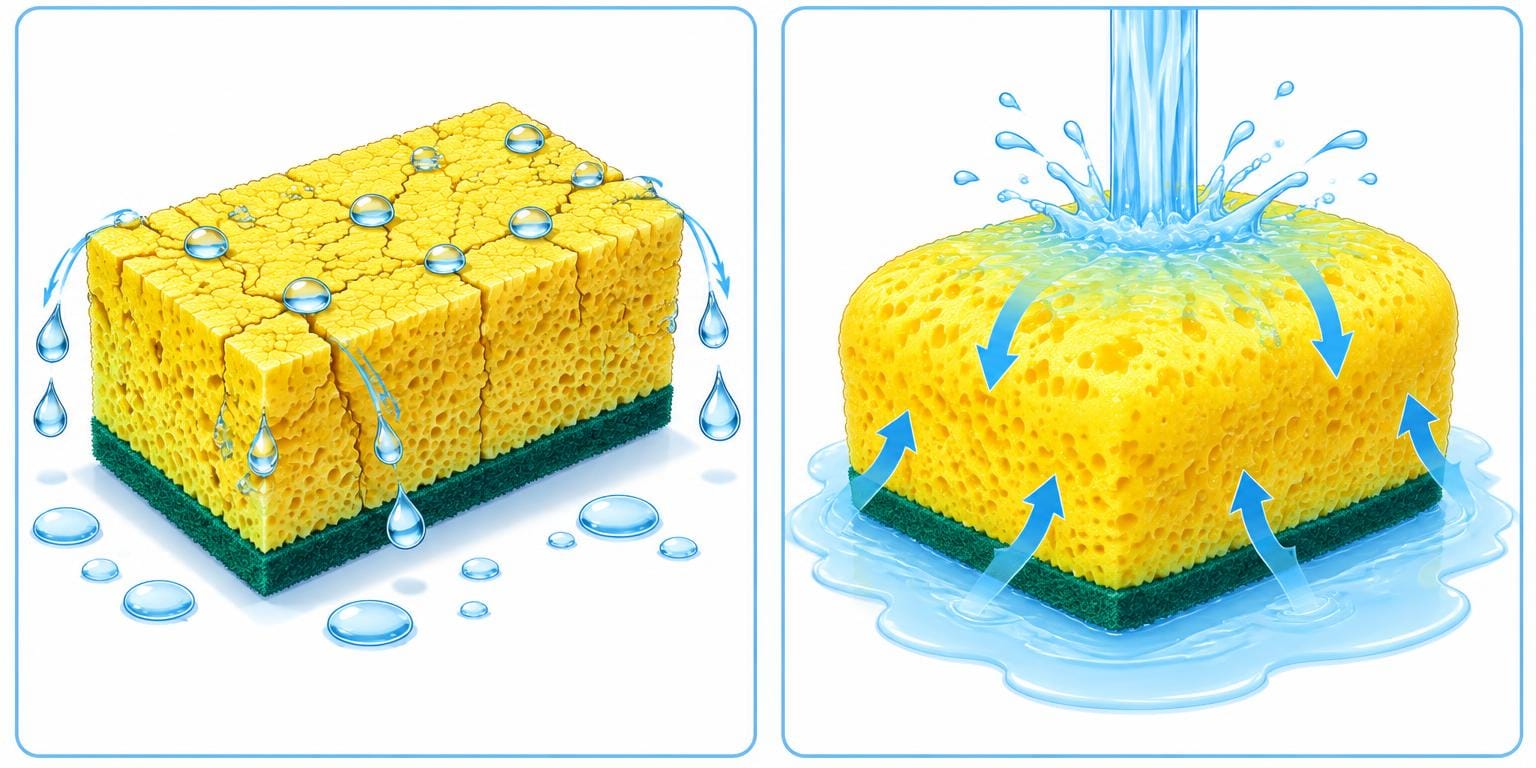
Think about an ordinary kitchen sponge left on the side of your sink for three weeks. It turns rock-hard, shriveled, and brittle as stone.
If you take a glass of water and dump it quickly over that hardened sponge, what happens?
The water beads right up and rolls straight off the crust onto the counter. The inside of the sponge remains completely stiff, dry, and unyielding.
The sponge didn't fail because it lacked water. It failed because it lost the internal molecular structure that allows it to absorb and trap water in the first place!
Your fascia works identically. Drinking gallons of water does nothing because your dried collagen scaffolding has lost the Hyaluronic Acid and Bamboo Silica water-magnets required to pull and lock that hydration inside deep connective tissue. The water passes straight through to your bladder, while your gluteal fascia stays bone-dry and clamped tight around your nerve.
And dumping generic collagen powder into your morning coffee doesn't fix it either. Taking collagen peptides without the specific enzymatic cofactors (silica, vitamin C, zinc, manganese) is like dumping bags of dry cement onto a job site with no water or mixer—it forms hard, dense clumps rather than supple, elastic tissue.
The Hidden "Glial Storm": Why Pain Keeps Firing Even After You Rest
Mechanical strangulation is only half the nightmare.
When densified fascia clamps down on the sciatic nerve, the physical compression acts as a mechanical shockwave that awakens resident immune cells surrounding the nerve sheath: Mast Cells and Microglial Cells.
These hyperactive cells panic and spray an inflammatory cocktail of neurotrophins, substance P, and inflammatory cytokines directly into the perineural space.
In neurobiology, this is known as a "Glial Storm."
The glial storm sets the sciatic nerve on fire chemically. Even when you lie down in bed, take a hot bath, or stay completely still, the glial cells keep spraying inflammatory chemicals against the nerve fibers.
The nerve alarm is stuck in the "ON" position.
This is why traditional pain pills like ibuprofen fail so completely: NSAIDs only block systemic COX enzymes in muscles and joints. They have zero biological effect on hyperactive glial cells or neuro-inflammation!
To permanently release sciatica without invasive surgery or toxic drugs, you must execute a coordinated, two-pronged biological strike:
- Strike 1: Rehydrate the Fascial Glide Layer from Within — Feed your cells the exact molecular precursors (oral Hyaluronic Acid + Bamboo Silica + Collagen Minerals) to rebuild the fluid cushion, cut viscosity by 500%, and release the mechanical stranglehold.
- Strike 2: Silence the Glial Storm at the Cellular Level — Deliver a clinical dose of the body's natural nerve off-switch: Micronized Palmitoylethanolamide (PEA), discovered by Nobel laureate Rita Levi-Montalcini, to shut down hyperactive mast cells and quiet screaming nerve alarms.
• Nutrients (2024 Meta-Analysis): Extended Treatment with Micron-Size Oral PEA in Chronic Pain (Schweiger V, Schievano C, et al., PMC11174044)
• Pharmaceutics (2022): Systematic Review of PEA in Neuropathic Pain (Scuteri D, Guida F, Maione S, et al., DOI: 10.3390/pharmaceutics14081672)

“For over twenty years, I watched sciatica patients run through the standard medical gauntlet: chiropractic, foam rollers, gabapentin, and painful spinal injections—only for their shooting leg pain to return the moment they got back to their desks. Fascia Release® is the first clinical formula that addresses the actual extraspinal root cause. By combining 600 mg of micronized PEA to extinguish the glial storm with 200 mg of oral hyaluronic acid to rehydrate the fascial glide planes, it delivers lasting mechanical and neurological release where everything else failed.”
The Breakthrough: Fascial Rehydration & Nerve Calming From Within
You cannot stretch, foam-roll, or crack your way out of a biochemical hydration deficit and a cellular glial storm.
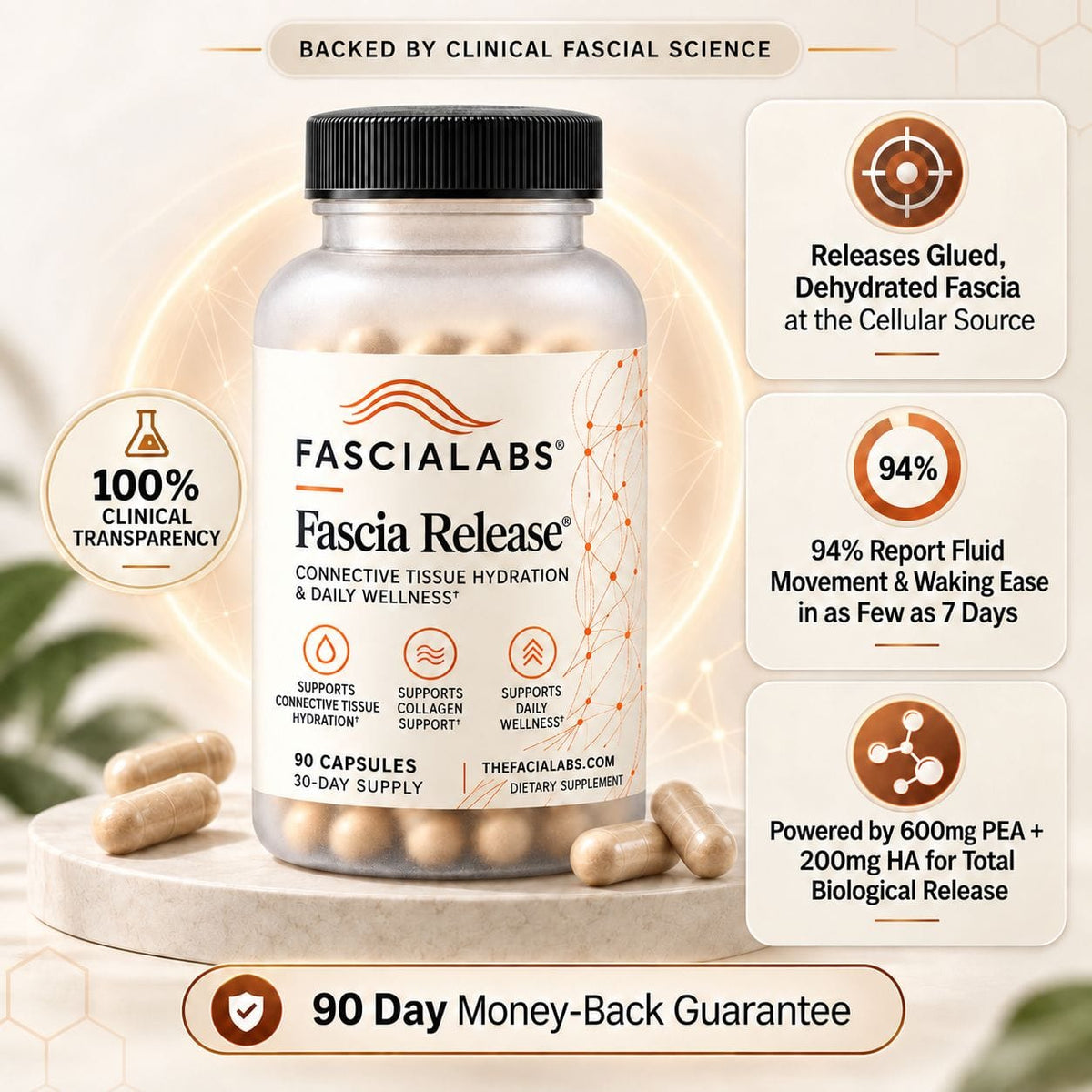
That is why the team of connective tissue biochemists, neurologists, and orthopedic specialists at FASCIALABS® developed the first multi-pathway clinical formula engineered to rehydrate densified fascia, restore 28mm sciatic nerve glide, and quiet chronic neurogenic pain from the inside out:
Fascia Release®: Deep Tissue Hydration & Nerve Calm
- 600 mg Micronized PEA: The natural nerve pain brake. Shuts down hyperactive mast cells and glial cells, extinguishing the burning neuro-inflammatory storm around the sciatic nerve.
- 200 mg Hyaluronic Acid (as Sodium Hyaluronate): The deep tissue water magnet. Rehydrates the extracellular matrix, cutting fascial viscosity by 500% to restore fluid 28mm sliding glide.
- 100 mg Bamboo Extract (Standardized to 70% Silica): The collagen stabilizer. An essential mineral cofactor for prolyl hydroxylase that knits strong, springy collagen fibers instead of stiff rawhide.
- 100 mg Boswellia Serrata Resin Extract: The botanical inflammation shield. Enriched with AKBA to selectively inhibit the 5-LOX enzyme, clearing soft-tissue inflammation without stomach damage.
- 150 mg Coenzyme Q10 (Ubiquinone): Cellular energy for compressed nerves. Rescues oxygen-starved peripheral nerves from ischemic injury and supports cellular ATP production.
- 100 mg Vitamin C (111% DV): The collagen builder. Mandatory enzymatic cofactor that knits fresh, flexible collagen fibrils together.
- 50 mcg / 2,000 IU Vitamin D3 (250% DV): The neuromuscular balancer. Calms deep neuromuscular hyper-irritability in gluteal and piriformis muscle groups.
- 10 mg Zinc Bisglycinate (91% DV): The tissue repair mineral. Regulates matrix metalloproteinases to clear away damaged, tangled collagen fragments.
- 2 mg Manganese Bisglycinate (87% DV): The hydration anchor. Activates glycosyltransferase enzymes that manufacture water-trapping proteoglycans inside deep fascia.
Micronized PEA starts shutting down hyperactive mast and glial cells. The searing, electric edge of your sciatic pain begins to dull. Morning hip stiffness starts melting away, and getting out of bed feels smoother and less guarded.
Hyaluronic acid, bamboo silica, and collagen cofactors saturate the dehydrated ground substance. Connective tissue sheets in your lower back and glutes begin absorbing water. The rigid "shrink-wrap" sensation softens, allowing your sciatic nerve to slide without catching.
Tissue viscosity drops by up to 500%. You can sit through long car rides, dinners, and workdays without shifting onto one hip. Daily micro-triggers—like tying your shoes or stepping out of an office chair—no longer spark sudden shooting spasms.
Your fascial architecture is supple, water-rich, and elastic. Long walks, gardening, family vacations, and active movement are fully restored without the paralyzing fear of a sciatic relapse.
Select Your Supply of Fascia Release®
Claim Your Clinical Supply Before The Current Batch Ships Out
You will be taken directly to the secure official FasciaLabs checkout page.
Our Ironclad 90-Day "Walk Pain-Free" Guarantee
Take Fascia Release® consistently for three full months. If your shooting leg pain doesn't dramatically vanish, if your hips and glutes don't feel loose, supple, and fluid, and if you aren't walking, driving, and sleeping without the constant terror of a sciatic spasm—simply email us within 90 days for a full, prompt, 100% refund. You don't even have to return empty bottles. We shoulder all the risk so you can experience real relief without hesitation.
Real Sufferers. Documented Life Transformations.

"The burning live wire down my leg finally went silent."
"I spent six years trapped in a nightmare. My doctor gave me meloxicam that ruined my stomach, and I spent over $3,000 on chiropractors and massage guns. Nothing lasted. By 2:00 PM every day at my desk, my right glute felt like it was clamped in a hot vice, shooting shocks all the way down to my toes. When I read about the fascial clamp, it felt like someone was describing my body for the first time. Two weeks into taking Fascia Release, the sharp burning edge completely dulled. By week six, I drove four hours to the mountains with zero pain. I finally have my life back!"

"My surgeon wanted to fuse my vertebrae. This gave me relief in 30 days."
"My MRI showed a mild L5-S1 bulge, and my surgeon immediately pushed for spinal surgery after three cortisone injections failed to hold. I was terrified of surgery. A physical therapist friend told me to research fascial nerve entrapment and try Fascia Release. It made complete biological sense. The morning hip stiffness started melting away within ten days. By day 40, the numbness in my calf and foot was completely gone. My surgeon was stunned at my follow-up mobility test. I cannot recommend this enough to anyone suffering from chronic sciatica."

"I can finally tie my shoes and sleep through the night without waking up in agony."
"As a former nurse, I was deeply skeptical of supplements. But when I reviewed the clinical trial on 600mg PEA and the ultrasound research from Dr. Stecco, I realized this is real, peer-reviewed medicine. Sciatica used to wake me up four times a night every time I shifted my hip. Putting on socks in the morning took ten minutes of cautious maneuvering. After two months on Fascia Release, I sleep through the night without a single pillow wedge. My hips glide freely, and I walk two miles every morning with my husband. It’s an absolute miracle."
Frequently Asked Questions
Yes. Fascia Release® is 100% drug-free, non-drowsy, and does not interact with central nervous system pathways. Its active ingredients—such as micronized PEA (a natural fatty acid amide the human body already produces) and sodium hyaluronate—target peripheral connective tissue hydration and local glial cell de-escalation rather than sedating the brain. However, as with any dietary supplement, we always advise showing the label to your prescribing physician.
Manual therapies attempt to fix a mechanical entrapment from the outside, but they cannot solve an internal molecular hydration deficit. Foam rolling and deep-tissue massage apply blunt pressure against an already inflamed, compressed nerve trunk, often triggering rebound protective spasms. Chiropractic realigns joints, but if the fascial sheets remain desiccated, sticky, and adhered (a 500% increase in viscosity), the tissue immediately clamps back down once you sit in your car. Fascia Release® works from within, supplying the exact building blocks (HA, silica, PEA) required to rehydrate the glide planes so manual therapies and natural movements actually work.
Standard joint supplements focus narrowly on articular cartilage in synovial joints (glucosamine and chondroitin), while turmeric only addresses generic inflammatory pathways with poor oral bioavailability. Generic collagen powder simply dumps protein into the body without the essential water-trapping matrix. Fascia Release® is the world's first formula engineered specifically for deep connective tissue (fascia) and peripheral nerve entrapment. It features 600 mg of clinically studied micronized PEA to extinguish the perineural "glial storm" alongside 200 mg of oral Hyaluronic Acid and 70% standardized Bamboo Silica to reconstitute the microscopic fluid glide layers.
Most customers report an initial softening of the sharp, burning electric edge and less morning stiffness within Days 1 to 7 as micronized PEA quiets overactive glial alarms. Between Weeks 2 and 4, as oral hyaluronic acid and mineral cofactors saturate the extracellular matrix, deep tissue glide is restored, significantly cutting down flare-ups during driving and sitting. Because connective tissue turns over gradually, the deepest and most permanent structural benefits manifest over 60 to 90 days of consistent daily use.
You are 100% protected by our 90-Day Empty Bottle Money-Back Guarantee. Take Fascia Release® for three full months. If you don't feel a dramatic release of your sciatic nerve pain, if your mobility doesn't surge, and if you aren't completely thrilled with your results, simply email our customer support team within 90 days of delivery. We will issue an immediate, 100% refund without hassle. You don't even need to send the empty bottles back.
COMPLETE CLINICAL REFERENCES & PEER-REVIEWED SOURCES:
- Cruccu, G., Di Stefano, G., Marchettini, P., Truini, A. (2019). Micronized Palmitoylethanolamide: A Post Hoc Analysis of a Controlled Study in Patients with Low Back Pain – Sciatica. CNS & Neurological Disorders - Drug Targets, 18(6): 491-495. PMC7132032
- Stecco, A., Pirri, C., Stecco, C. (2019). Fascial Entrapment Neuropathy. Clinical Anatomy, 32(7): 883-890. PMID: 31004463
- Stecco, C., Stern, R., Porzionato, A., Macchi, V., Masiero, S., Stecco, A., De Caro, R. (2011). Hyaluronan within fascia in the etiology of myofascial pain. Surgical and Radiologic Anatomy, 33(10): 891–896. PMID: 21964857
- Stecco, C., et al. (2018). The fasciacytes: A new cell devoted to fascial gliding regulation. Clinical Anatomy, 31(5): 667-676. DOI: 10.1002/ca.23072
- Stecco, A., Cowman, M., Pirri, N., Raghavan, P., Pirri, C. (2022). Densification: Hyaluronan Aggregation in Different Human Organs. Bioengineering (Basel), 9(4): 159. PMC9028708
- Yen, Y. S., Lin, C. H., Chiang, C. H., et al. (2024). Ultrasound-Guided Sciatic Nerve Hydrodissection Can Improve the Clinical Outcomes of Patients with Deep Gluteal Syndrome: A Case-Series Study. Diagnostics, 14(7): 757. DOI: 10.3390/diagnostics14070757
- Schweiger, V., Schievano, C., et al. (2024). Extended Treatment with Micron-Size Oral Palmitoylethanolamide (PEA) in Chronic Pain: A Systematic Review and Meta-Analysis. Nutrients, 16(11): 1644. PMC11174044
- Balogh, L., Polyak, A., Mathe, D., et al. (2008). Absorption, Uptake and Tissue Affinity of High-Molecular-Weight Hyaluronan after Oral Administration. Journal of Agricultural and Food Chemistry, 56(22): 10582–10593. DOI: 10.1021/jf8017029
- de Carvalho, J. F., Davidson, J. (2024). Oral Hyaluronic Acid in Osteoarthritis and Low Back Pain: A Systematic Review. Mediterranean Journal of Rheumatology, 35(4): 557-562. PMC11778613
- Jugdaohsingh, R. (2007). Silicon and bone health. The Journal of Nutrition, Health & Aging, 11(2): 99-110. PMC2658806